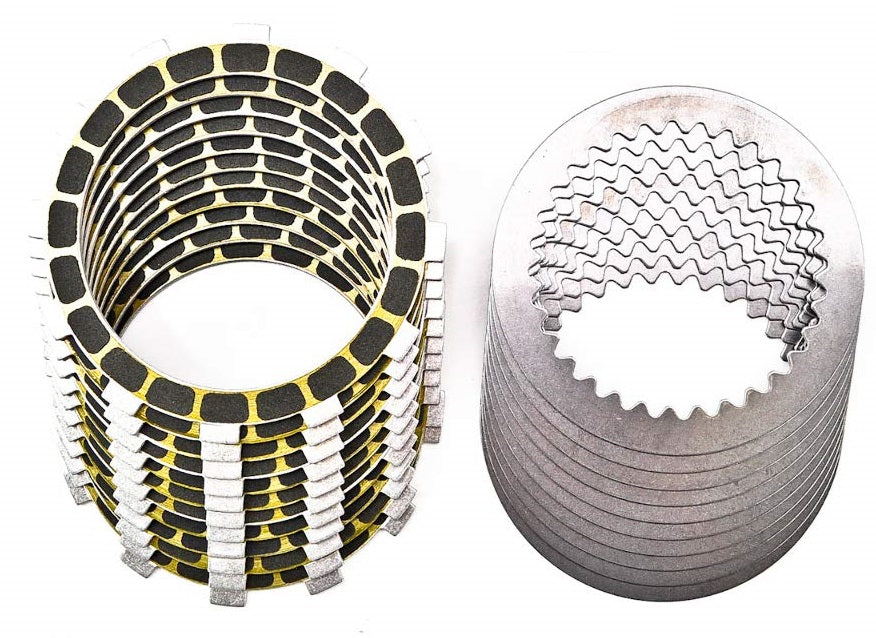
Barnett Kevlar reinforced clutch plates 306-25-20005
Estimated Shipping Widget will be displayed here!
Barnett Kevlar reinforced clutch plates 306-25-20005-Maximum grip & durability
Ideal to combine with the Barnett reinforced settlement set
Upgrade the link of your Ducati with the Barnett Kevlar reinforced clutch plates 306-25-20005 And experience an unparalleled response and sustainability. This set is specially designed to improve clutch performance and offers one stronger grip, minimal wear and smooth power transmission.
Thanks to the high -quality Kevlar and carbon fiber construction Are these plates a huge upgrade compared to standard coupling plates. They are resistant to extreme temperatures and offer a longer lifespan, even with intensive use. Ideal for both Daily driving as sporting performance!
Why choose Barnett?
✔ Kevlar reinforced plates - Extremely durable and heat -resistant
✔ Optimal power transmission - Prevents clutching
✔ Smooth and precise effect - Shifting and accelerating better
✔ Made in the USA - Quality and craftsmanship guaranteed
✔ Completely supplied - including the correct amount and thickness of the plates
Suitable for:
✅ Ducati Monster 620 (2005-2006)
✅ Ducati Monster 695 (2007-2008)
✅ Ducati Monster 696 (2009-2014)
✅ Ducati Monster 796 (2010-2014)
✅ Ducati Monster 797 (2017)
✅ Ducati Monster S2R / S2R 800 (2006-2007)
✅ Ducati Scrambler Café Racer (2017)
✅ Ducati Scrambler Classic (2017)
✅ Ducati Scrambler Desert Sleed (2017)
With the Barnett Kevlar clutch plates you get the most out of your Ducati. More grip, less wear and ultimate control - ready for every ride!
Assembly manual & tips
Replacing the coupling plates is a relatively simple procedure for those who have some key experience. Follow the steps below for correct installation:
1. Preparation
- Make sure the engine is completely cooled before you start.
- Place the engine on a stable standard for good access to the clutch lid.
- Collect the required tools: a cover keys set, a torque wrench and a liquid gasket For the clutch lid.
2. Disassembly of the old coupling plates
- Drop the engine oil or put the engine on the side stand to prevent spilling. You can reach the clutch without having to get all the oil out of the block, but it is advisable to immediately change the oil if you replace the clutch, so that you do not get an old material in your new clutch plates.
- Remove the bolts from the clutch lid and carefully remove the lid.
- Take a photo of the order in which the current clutch plates and steel plates are placed - this helps with the assembly of the new set.
- Remove the old clutch plates and check the condition of the samples in between.
3. Preparation of the new plates
- Dip the new one Barnett Kevlar clutch plates At least 30 minutes at the bottom of fresh engine oil to prevent them from walking dry at the first start.
- Check if the plates match the old set in size and thickness.
4. Montage of the new coupling plates
- Place the plates in the same order as the original set: alternately a coupling plate and a steel plate.
- Make sure that the last plate is placed correctly according to the instructions of Ducati (sometimes in a separate slot for better friction).
- Check whether the pressure group is mounted correctly and tighten the clutch springs evenly. Use a torque wrench to secure the bolts on the prescribed tackling moment.
5. Finishing & testing
- Clean the edge of the engine block and the engine block cover, and spread one thin layer liquid gasket On the edge. Work economically, you don't want too much liquid gasket on the edge.
- This is a great moment to immediately one clutch cover with transparent window To be mounted.
- Mount the clutch lid and cite all bolts with the prescribed tackling moment.
- Fill the engine with fresh oil if necessary.
- Start the engine and pull the clutch a few times to distribute the oil well over the new plates.
- Take a short test drive and note:
- Does the coupling feel flexible?
- Is there no slip or shocks while switching?
- Does the clutch lever come to a pleasant pointing point?
After a few journeys, it is advisable to check the clutch adjustment and, if necessary, to fine tune the hydraulic pressure.